
Have you ever wondered why some people just seem to have naturally glowing skin, while others struggle with dullness, breakouts, or irritation no matter what products they try? The secret isn’t always in expensive creams or serums often, it starts from within your gut.
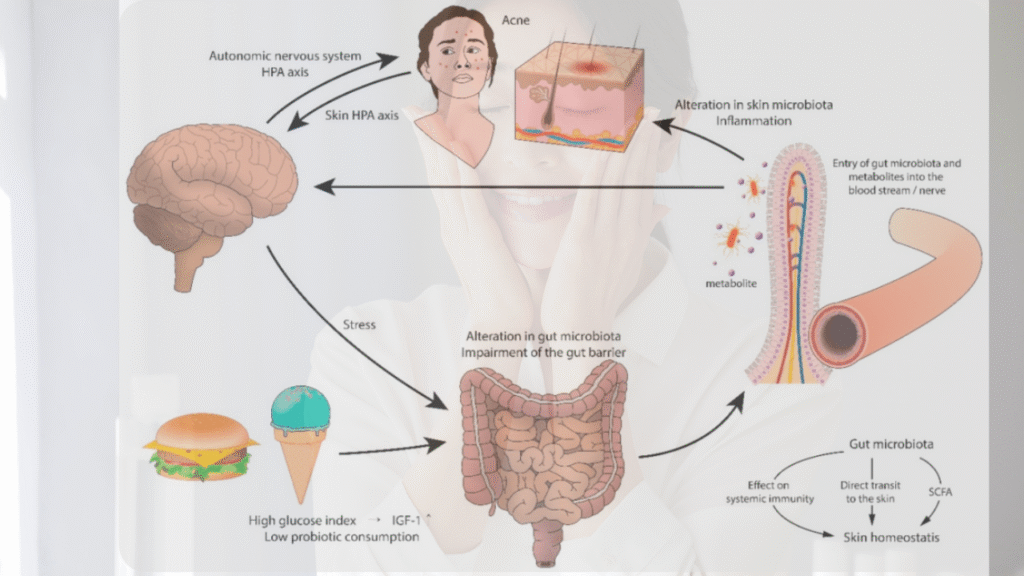
Yes, your gut health and skin glow are closely connected. What you eat, how your digestion works, and the balance of good bacteria in your digestive system can directly affect how your skin looks and feels. Let’s break down this fascinating connection.
What Is Gut Health?
Your “gut” isn’t just your stomach. It’s your entire digestive system, which includes your intestines and the trillions of bacteria living there, also called gut microbiota. A healthy gut has:
- A good balance of beneficial bacteria,
- Smooth digestion, and
- Proper absorption of nutrients like vitamins and minerals.
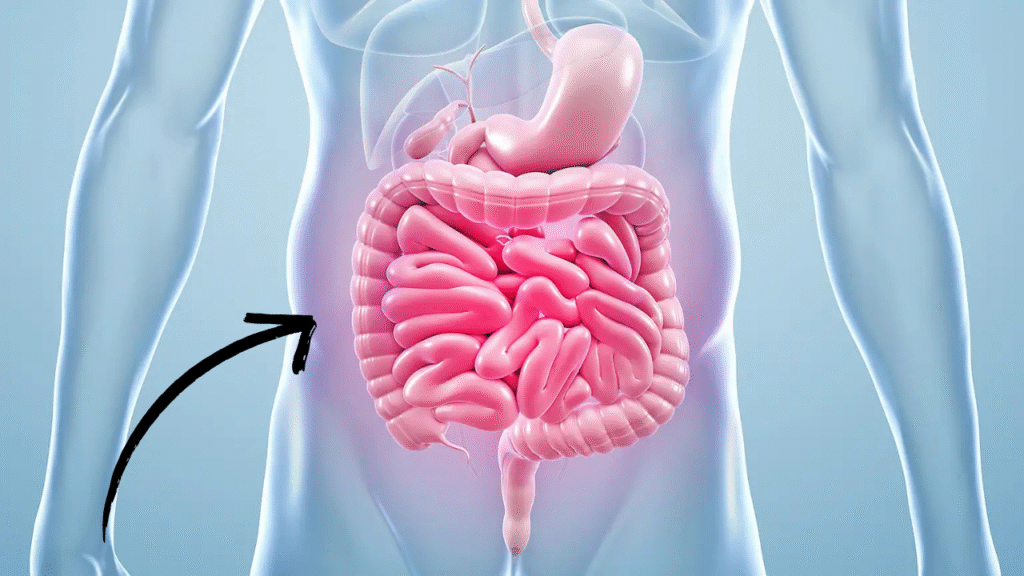
When your gut is out of balance, often due to poor diet, stress, antibiotics, or lack of sleep, it can lead to inflammation in the body, which shows up as skin problems.
How Gut Problems Show Up on Your Skin
- Acne and Breakouts
Studies show that an unhealthy gut can trigger inflammation and hormonal imbalance, which often leads to pimples or cystic acne. - Dull Skin
If your gut isn’t absorbing nutrients properly, your skin might lack essential vitamins like vitamin C, vitamin E, and zinc, which help maintain natural glow. - Redness or Rosacea
Inflammation from gut imbalance can manifest as redness, rosacea, or other sensitivity issues. - Dryness or Eczema
Certain gut bacteria produce compounds that affect skin hydration. If these are low, you might experience dry or flaky patches.
Foods That Boost Gut and Skin Health
Eating the right foods can improve both your digestion and skin glow:
- Probiotics: Yogurt, kefir, kimchi, miso, and sauerkraut help increase good bacteria.
- Prebiotics: Garlic, onions, bananas, asparagus, and oats feed beneficial gut bacteria.
- High-Fiber Foods: Whole grains, vegetables, and fruits help smooth digestion.
- Healthy Fats: Avocado, nuts, and olive oil reduce inflammation and support skin hydration.
- Hydrating Foods: Cucumbers, watermelon, and coconut water keep skin plump and radiant.
Lifestyle Habits That Support a Healthy Gut
- Drink Plenty of Water – Hydration helps digestion and skin moisture.
- Manage Stress – Stress impacts gut bacteria, which in turn can trigger skin inflammation.
- Get Enough Sleep – Poor sleep slows down digestion and skin repair.
- Move Your Body – Exercise boosts blood circulation and supports gut function.
- Avoid Overuse of Antibiotics – They can kill beneficial bacteria and harm gut balance.
How to Start Seeing Results
Gut health doesn’t change overnight. Consistency is key.
- Start by including one probiotic and one prebiotic in your diet every day.
- Drink 2–3 liters of water daily.
- Keep a food diary to notice which foods trigger skin issues.
Within a few weeks, you’ll notice:
- Less bloating and better digestion,
- Reduced redness or inflammation,
- And most importantly, a natural, healthy glow on your skin.
Best Daily Routine for Good Gut Health
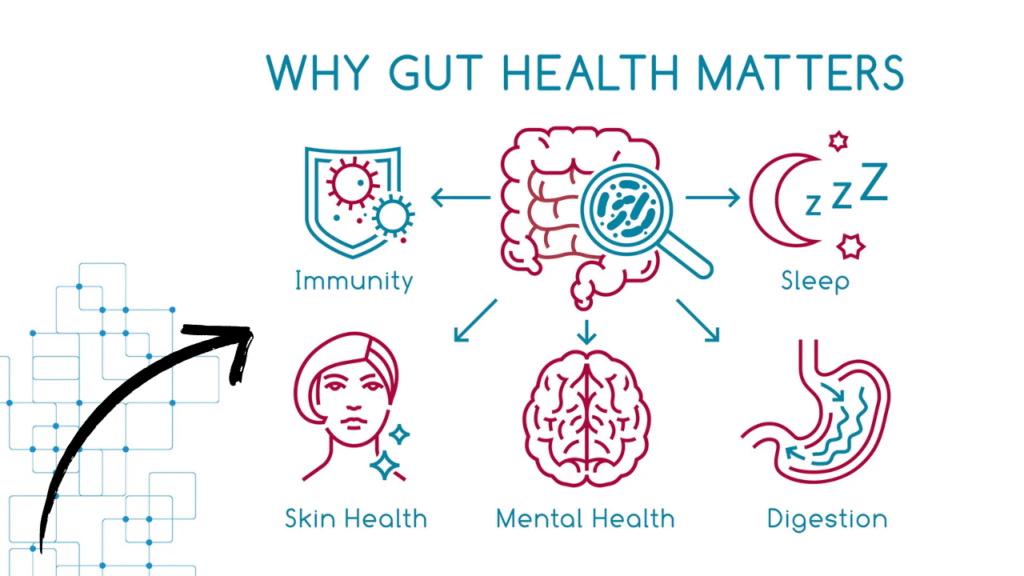
A happy gut doesn’t just improve digestion, it also boosts immunity, energy, and even your skin glow. The key is a consistent, balanced routine that supports your gut bacteria and overall digestion. Here’s how you can do it step by step:
Morning Routine for Your Gut Health
Start your day by drinking a glass of lukewarm water, adding a few drops of lemon if you like. This simple habit helps wake up your digestive system, flush out toxins, and prepares your gut for food. Along with hydration, include probiotics early in the morning, such as yogurt, kefir, or a probiotic supplement with breakfast, to support healthy gut bacteria and improve nutrient absorption. A fiber-rich breakfast is essential, options like oatmeal with fruits, whole-grain toast with avocado, or a smoothie with spinach and banana feed good bacteria, keep you full, and regulate bowel movements.
Daytime Routine
During the day, make sure to move your body. A short walk after meals or light exercise improves digestion, encourages gut movement, and reduces bloating. Drinking plenty of water throughout the day keeps digestion smooth and supports nutrient transport. Include prebiotic foods in your lunch, such as garlic, onions, leeks, asparagus, or beans, to feed beneficial bacteria and maintain a healthy gut environment.
Evening Routine for Gut Health
In the evening, avoid heavy meals close to bedtime and try to finish dinner 2–3 hours before sleep to prevent acid reflux and allow your gut to repair overnight. Include light fermented foods like kimchi, sauerkraut, or pickled vegetables, which naturally boost probiotics and enhance digestion. Take time to relax and manage stress through meditation, deep breathing, or a short walk, as stress can disrupt gut bacteria and digestion. Prioritize sleep by aiming for 7–8 hours each night, giving your gut time to repair while supporting hormone balance and skin health.
Weekly Routine For Gut Health
For extra gut support throughout the week, include fiber-rich snacks such as nuts, seeds, fruits, and vegetables. Avoid processed sugar and fried foods, which can disrupt gut bacteria, and limit antibiotic use unless necessary, as they kill beneficial bacteria. Staying active with gentle yoga or stretching also supports healthy digestion. Following this routine consistently can help improve your digestion, boost immunity, and even give your skin a natural, healthy glow.
Your gut and your skin are more connected than most people realize. Treat your gut well, feed it nourishing foods, and your skin will thank you. Think of your glow not just as a cosmetic goal, but as a sign of inner wellness.
Remember: glowing skin isn’t just about serums or facials, it’s about a happy, balanced gut.